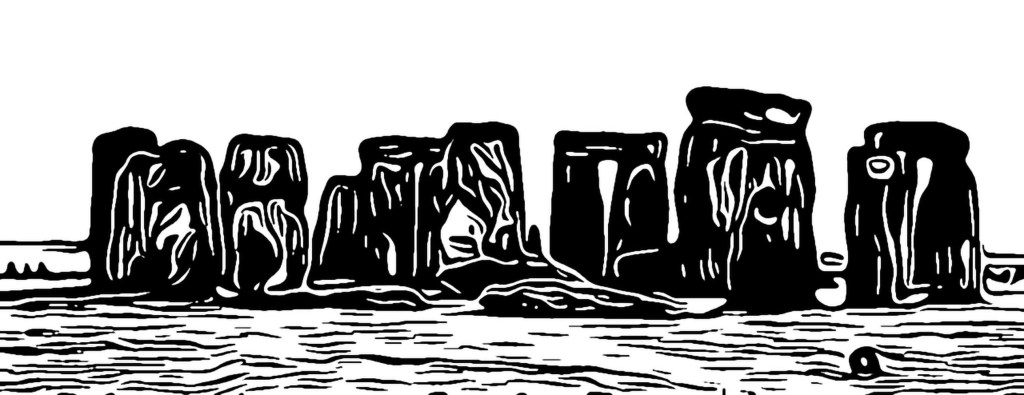
One of the best known sites in the world and still one of the most enigmatic. For centuries people have speculated as to its purpose and who its builders were. Of recent times there have been many big discoveries about Stonehendge but if anything they just further add to its mysteries.
One of the lead archeologists who has revealed many of these discoveries is Professor Mike Parker-Pearson of University College London. These include:
Durrington Walls: Probably the village that housed the people who contructed Stonehenge. But mysteriously built on top of the original village is a construction that required as many as 300 huge wooden posts, evenly spaced 5m apart in a ring almost 450m across. And yet, more mysteriously, within a maximum of 50 years this monument had been decommissioned, its posts removed and their sockets filled in. What, why?
The Bluestones: These are the smaller stones at Stonehenge. It is assumed that originally there were about 80 of them but now only 43 remain. They each weigh between 2 and 5 tons and came originally from Prescilli in Wales. They were placed there during the third phase of construction at Stonehenge indicating a gap of some 500 years. How were they moved and why?
Stonehenge was moved from Wales: In early 2021 Parker-Pearson annouced he had indistputable evidence that Stonehenge was first built in Wales and then moved to its current site. Interestingly this fits in with an ancient myth about Stonehenge, first recorded 900 years ago, which tells of the wizard Merlin leading men to Ireland to capture a magical stone circle called the Giants’ Dance and rebuilding it in England as a memorial to the dead. This account is by Geoffrey of Monmouth who is also mentioned in The Wisdom Of Rhiannon series due to his reference that Caesar’s invasion was a failure. Further evidence comes from the fact that the diameter of the Welsh site is 110 metres which is identical to the ditch that encloses Stonehenge. It is aligned on the midsummer solstice sunrise, just like the Wiltshire monument.
.
 The Wisdom of Rhiannon